Around the Spectrum - Get Up, Get Out, Get Active: Inclusive Sports and Raising a Child on the Spectrum (with James Paoletti)

What happens when a special education teacher becomes an autism parent? James Paoletti spent nine years teaching in a self-contained autism classroom before his own son's autism diagnosis gave him a new perspective from the other side of the IEP table. That experience inspired him to create Spectrum Sports, an inclusive sports program for autistic children and adults in New Jersey, helping families discover the benefits of inclusive sports for autistic children through movement, community, and connection.
In this episode, we talk about:
- Why sitting on both sides of the IEP table changed how James advocates for his son, and what parents often misunderstand about school special education teams
- How Spectrum Sports grew from a rented basketball court into a full-time inclusive sports and fitness program, built on the motto "get up, get out, get active"
- What to say to parents who are hesitant to try sports or group activities with their autistic child, and why free trials lower the barrier
- Why autistic adults are so often the forgotten population once school services end, and how day programs can keep movement and connection going
- The advice James gives every overwhelmed parent after an autism diagnosis: progress, not perfection, one day at a time
Whether you're a parent navigating a new diagnosis, a teacher supporting autistic students, or a professional serving neurodiverse families, this conversation is a reminder that you're not alone and there are opportunities out there for every child.
Subscribe to Around the Spectrum wherever you listen so you don’t miss future conversations.
If this episode was helpful, leave a review. It helps other parents and professionals find the show.
Learn more at
https://www.aroundthespectrum.com
Because when we sit at the same table, we understand more and judge less.
00:00 - Welcome To Around The Spectrum
00:27 - Meet James Paoletti And Leo
01:23 - From History Teacher To Special Ed
03:40 - Diagnosis And Early Support Services
06:35 - Life On The Other Side Of IEPs
09:02 - Why Spectrum Sports Begins
13:20 - Inclusive Fitness For Adults Too
14:47 - Helping Hesitant Families Try Sports
18:13 - You’re Not Alone Progress Matters
20:55 - Closing And Listener Invitation
Welcome To Around The Spectrum
SPEAKER_00
Hi everyone, welcome to Around the Spectrum, where parents, pros, and those in between pull up a chair for honest conversations, grounded guidance, and real stories about raising and supporting autistic kids. I'm your host, Wendy Manganero. As a parent, marketing leader, and a longtime autism ally, I know how overwhelming and isolating this journey can feel. That's why we're here. Because when we sit at the same table, we understand more and judge less. Let's get into today's episode.
Meet James Paoletti And Leo
SPEAKER_00
On today's episode of Around the Spectrum, we're pulling up a chair with another parent, James Paoletti, walking this journey, not with a perfect plan, but with lived experience and a whole lot of heart. You'll hear how they've navigated diagnosis services and the in-between moments no one prepares you for. James grew up in Washington Township, New Jersey, and went to Rutgers, Camden, where he studied history and attained his teaching certificate as well as his special education certificate. He taught Williamstown High School in a self-contained autism classroom for nine years and during that time started Spectrum Sports, an inclusive sports and fitness program for the neurodiverse population. He lives with his wife Amanda and their three boys and their oldest son, Leo, who is on the spectrum. Hi, James. Thanks for being on the show with me.
SPEAKER_01
Absolutely. Thank you.
SPEAKER_00
I'm really excited to record this. We met because your company had a table at Autism, New Jersey, which is one of my favorite events every year. So I'm glad that we were able to connect. But
From History Teacher To Special Ed
SPEAKER_00
I'd love to get into you sharing a little bit about your background as a special education teacher and what first drew you to working with children with special needs.
SPEAKER_01
Yeah. So as you mentioned, I taught at Williamstown High School for almost nine years. And I was given the position as a self-contained autism teacher in a new program that they were starting. I was very lucky in my teaching career. I was a student teacher there, went into a subbing position, and then I was offered the position that I was working in for nine years. So I was at the same spot for a while, which was really nice. And what really drew me to working with this population, and even going back to when they offered me the position, they were in a very unique position with the parents because the class that they had at that time just had a lot of students in there. And they needed another teacher to really break it up. And that's when they brought me in. And at that time, they told me to have a position for you. We'll be doing this. In my head at first, I said, I'm like, I didn't go to school for specifically. I went to school for history and amongst other things. So I'm like, this is a job. Because I was right out of college. But I said this would be a really cool opportunity. So I, of course, said yes. But my confidence in that, I think, really came from growing up with my wife's sister, who has Turner syndrome. So she has special needs. And my wife and I are high school sweethearts. So we grew up together. So growing up with her and her sister and really understanding and learning about that world really helped me feel confident, I think, going into this. And also choosing that when I was in college as getting that certification as well. Because I was always told by my mother-in-law, you really have good patience with her. And like I said, learning about that world and meeting her friends. It's such an amazing thing to see them in their environment and having fun and doing everything that they do. They're so busy. But that really gave me the confidence to really work with this population and accept it as a challenge. And of course, not knowing where that was going to take me to now, all the pieces connected within the last 10 years. So yeah, I think that really gave me the boost to really take that jump.
SPEAKER_00
That is
Diagnosis And Early Support Services
SPEAKER_00
awesome. At what point did you feel that experience intersected and you were like, oh, okay, here are the warning signs?
SPEAKER_01
Yeah, it was difficult, of course, for any parent to hear that. And as you mentioned before, I think the choices that you make now prepare you for things that happen in the future which you don't think are going to happen, but life happens that way. And I think with the position I was in my career and my experience, that certainly helped on that side of the field. My wife also had experience in college working with her sister, but also fighting for different rights and opportunities for her sister. So she was also well versed in understanding we got to this point, we should look in the services now because of A, B, and C. For both of us, I think we were well equipped. So Leo was six now. He was diagnosed when he was four, I want to say. And very similar, he had a speech delay. He was born right before COVID. He went right into the isolation, not really having even going into the non-social world that we were in. And he had some speech delays. My wife, given the experience that she had, got him started with some services with OT, PT, and those small things that we noticed that were missing some milestones as he was growing up. So we had those services, speech, OTPT. And then eventually, once we got off of a wait list for wherever we had him tested, he was diagnosed. And despite all of the experience that we have hearing that as a parent, it's heartbreaking. It's not what you want to hear or expect. But for me, it was okay, let's go. We know we kind of have our foot in the door already. Now we have that official diagnosis, and now we just have to advocate for him as a parent. And yeah, I think once we got over that initial diagnosis, we were able to really push for him and continue those services that we had in place for him. He was able to get into a special ed class at our school district a little earlier. So he was able to get more of those supports and he had continued services with OT and PT. And now he's doing fantastic. And he was actually just diagnosed with ADHD recently, in addition. So we're balancing that act to see which is working for him and which is not working for him. Even though being prepared professionally for it, given my career, it's a whole nother ballgame as a parent because you're now on another side of the table in school meetings. I was on both sides. I was there as a teacher, and then I was there as a parent, and they're two completely separate things. I think for that for me was the biggest thing to adjust to was you're on the other side of the table now saying, This is my son, and I'm advocating for him to get everything that he deserves. Yeah.
Life On The Other Side Of IEPs
SPEAKER_01
So I think that was the biggest hurdle.
SPEAKER_00
Because you've seen both sides. What do you think parents often misunderstand about the school systems or special education support?
SPEAKER_01
I think it's a lot. I think starting from the teacher side, number one is the teacher, when you're in those meetings, you have several people there, all there for their different areas. As the teacher, you're seeing the student every day in their routines and their natural habitat, teaching them, trying to work with them. But then you have the other parts that are you have the case manager, you have OT speech, and they're all talking about their different parts and then it all connects together. I guess for as a teacher side of it, for the parents to see it's a lot of moving parts, and there's a lot of hands in the pot that are involved. But then you go to the parent side where you're saying, what are you doing to help reach his goals? How are you accommodating his needs? And you really want to go in with an understanding of everyone there is advocating for that child, even though it may be in a different area, but we're all working towards the same goal is trying to make them succeed to the best of their ability and giving them every opportunity they can to succeed. I think for a parent, that's where you have to go in understanding, and especially for me, because I was on the other side. I'm very quick to say, Oh, okay, I get it. And then my wife is more, oh, tell me more, explain to me why. So yeah, I think it's just understanding that there's so many moving parts. And if you come in with an open mind, but also a goal of this is where we want our child to be at, how are we helping them? And I think that would help a little bit. And as a teacher, it is hard because you're just there in that capacity and you are communicating with the parents most of the time in that scenario on a day-to-day basis. So you kind of have a good relationship already. So now when you get through those meetings, it's saying, okay, here's how this has been their progress. This is how they're doing, this is some areas we're working on and stuff like that. And again, it's saying we're doing everything we can. And we also want at home from a teacher to a parent, we want your support to support us and then vice versa, I think.
SPEAKER_00
And so I think teachers are amazing. And I think that advocating in a way that it is a we is really important, what you kind of get and knowing what you how to advocate for and knowing your child, right? Everybody knows their own child, what their needs are and how to do that. So I think that's a really important, but I find it interesting because now you've had teaching experience, you're a parent, and then you go and open a physical education
Why Spectrum Sports Begins
SPEAKER_00
place, right? Like a physical physic place called Spectrum Sports. And so I'd love to know how that all weaves together because now you parent and you're still back in the field of it, but in a different light, in a completely different light.
SPEAKER_01
Completely different light. Yep. Yeah. So with Spectrum Sports, while I was teaching a couple of years in, my students had physette class just like normal in their schedule. And the first part of it for me was I would always go down their physette class, was usually during my lunch or a prep period. And I would always go down to the gym class and participate with them because they had so much fun. And seeing them in that environment versus a classroom is two totally different things. And seeing them have the opportunity to just run around and let off some steam and energy, it was so much fun. And our teachers that we had in the class were so accommodating and they tried everything they could, oh, so many different things to get them moving and socializing. And the more I was participating in that class, the more I was learning that when they got home, they really didn't have that same opportunity. A lot of my students that I knew would just go home and go right on an iPad. And then at that time, before I had kids, I was like, Oh, they need to get out of the house. And now as a parent, I'm like, we need to make dinner for them on the iPad. So I completely understand that side now, but it was more of the opportunity. They didn't have an opportunity or something to go to and be active and move and socialize. So my partner, Dan and I put our heads together and said, we got to do something for them to get them out. So we rented space at a local basketball court and started saying, hey, we're Spectrum Sports, mostly sports in the beginning. And we had a couple kids come out. They were my students, they're straight from my class, but they had a blast and we just had a blast with them. And we just really worked on getting them moving. So our motto is get up, get out, get active. And we wanted to do exactly that get up out of the house, get outside, get moving. And we were doing that through sports and fitness and socializing with each other. And we did that for a couple years, and we started to have two days a week, going to different locations, meanwhile, still teaching. So we were just doing it after school. Yeah. And then from there it grew. And then right into COVID, as the world happened, and we had to stop everything, even as we went into remote teaching. We had to stop our classes as well. So we tried to keep in touch with all the parents. And I still have video of us in my driveway doing workouts with milk jugs and saying, Hey, if you have this, you can do this at home. And just trying to get any way for them to be moving at home because now they were home doing nothing even more. And it got to the point, I think it was in June when it got nicer out. I said, We got to go to a park and we got to just say, Hey, we're gonna be here. We got to get these guys out of the house. And it was at a local park, and we had 20-something kids come and we had them all separated six feet by cones, and we were just working out. We just had fun and we did that for a while, and that almost a year, and that really blew up for us athlete-wise. We just got more and more interest, and we started working two jobs at that point, right? We were teaching and then we were also doing that a couple of days a week. And from there, it was shifting from teacher to then entrepreneur at night, and then learning how to manage a business and how to grow, hiring employees. As we continued to grow, we saw the same need with adults in this population within day programs or even just as an adult in general. And we wanted to continue that and provide those services for the adults. Most of our athletes are actually adults that come to us. And we provide opportunities and classes for day programs as well. So they come to us for an outing and we provide the same physical activity for them as well. And a couple of years ago, we finally got the approval from our wives to quit teaching so we can pursue this full time. And from there, we've just been growing and expanding and just really providing as many opportunities as we can for this population in terms of classes, social events, workshops, just anything, really.
Inclusive Fitness For Adults Too
SPEAKER_00
I love that you do it for adults because I think that's what happens. There's a lot of parents who near that 18 to 20, and they what are we gonna do? What will this look like after school? So I'd love that there is a way for it to continue happening for adults because sometimes that is the forgotten population as children are get older. But he was great at the support. He could never like the whole teen years, he wouldn't make a shot, but he could get the ball to somebody, right? He could, that was his gift. He was the ball to somebody. Because one of the things, like when my son was diagnosed, that his Peter Treshion just said, keep every sport, keep getting him in the community so that he build these social skills. So for those parents who are hesitant, maybe they don't have something like you near them. How do you talk to those parents who really want their children to try something that may be on the spectrum? And trust me, it was a very difficult time during that middle school. My son had a crisis when he realized that he was not like the other kids who were so sport-oriented to have different types of relationships. There was like a lot of emotional relationship issues he was going through, and which middle schoolers do, but add in that I know that I'm different and I don't think like you do, and I don't have the same interests as you, it really just exasperated the issue. So, how do you talk to parents who are hesitant and they want to try something and they want to socialize their kids in this because teams are great because they advocate for you on the team.
Helping Hesitant Families Try Sports
SPEAKER_01
Yeah, it's tricky. One thing I always tell, even in just relating this to spectrum for a second, I have some parents that are hesitant to just try us at first, too. And I always say we offer free trials so they can come and try it out. And that's what I encourage us to say, come and just try it. Meet our team, meet other athletes that are doing it also. And that's what I really push for them is just to come try it. And I'm very honest. I said it may not be for everybody, but it if you come in trying and then you know you tried, that's better than thinking, I wonder if he would have liked this or she would have liked this. For parents that may not have anything like us in the area. I know today there's a lot more inclusive opportunities for this population. And inclusive is very flexible because inclusive for us is we're open to everyone of all abilities. So you may have a very high-functioning athlete working with a lower-functioning athlete or different abilities, whatever it may be. We're all together working towards the same goal. And if you look around your area or town, there, I'm sure there are something that will work for your son or daughter. And even if it's not labeled as inclusive or like a buddy thing, it's more so giving it a try. And I think in today's world, there is a better understanding of there's someone that may be different than me. And we really want to accept them onto the team, right? And they may not be doing as much as me, but they still have the opportunity and should be able to participate in any way. And not even as an athlete, but or other athletes, as someone that's coaching that team, again, I think it's in today's world, there is a better understanding that I know a couple of players on my team need a little more help or accommodations or whatever that may be. But even as a parent, when you're looking, there are so many different things you can try for a kid. My son, for example, we had him do gymnastics. He did great in it. We did T-ball a few years ago. He did okay. We're trying it again just because my younger son, our second son, is doing it with him. So that's nice he knows someone there. But there's so many things that they can try that may not be team oriented or whatever, but it's still in this sense, they're getting to move very, they're getting to express that energy or that, and it helps in so many other ways too for them. I always joke with our kid program, with our parents that are interested. And I say, I can promise you one thing, I'm gonna give them back to you tired. And I know that's gonna help. I think just the main thing is to really just try and try as much as you can. And I think working, having that understanding that in today's world, the other athletes and even the adults or the coaches have a conversation with them and just say, Hey, my son really likes baseball, but he needs a little more help. I think that help is there. I think it just needs to be a conversation too, of explaining what's going on and just go from there, really.
SPEAKER_00
Because he was so sensory, he'd kick the ball and fall flat on his face. Every time he kissed the ball, he would fall. He would kick and want to feel the ground. And they were so patient with him. One of the other things I'd love to know from you is looking back at your own journey, both as a professional and as a parent, what do you wish somebody had told you earlier?
You’re Not Alone Progress Matters
SPEAKER_01
I would say two things. First one is you're not alone. Thousands of other parents, families that are going through the same thing you are. And whether that is talking to them in a Facebook group or through your school or anything, having those resources and other parents just to be talked to about things is extremely helpful. And then my second part is there are opportunities out there for your athlete, right? For your son or daughter. Just because they're different doesn't matter. There are opportunities out there. And connecting that to the resources piece, if you talk to other families, they may say, Oh, hey, did you try this? There's this thing over here. They may like this. And it's really a very valuable network within this world of everyone just advocating for their son or daughter, but also just everyone shares what they know and who they know. And it's really helpful in that sense, just knowing you're not the only one going through this, and also knowing there are opportunities or even services out there to help your son or daughter.
SPEAKER_00
Yes, that's fantastic. And knowing that you're not alone is so important. I know every parent goes through their own emotions after they get that diagnosis, but it can be also very overwhelming because suddenly we're have to figure out a whole new world. And as a parent who's listening today is feeling overwhelmed and unsure after receiving their diagnosis of their child, what is one piece of wisdom you would want them to know?
SPEAKER_01
I would honestly say, and this is something that helps me, is take it one day at a time. It's a lot, but worrying about it isn't going to do any good. Being it's more about progress and not perfection. I think as an adult growing up, for me, perfection is not a reachable target. It's because then when you once you get to perfection, where else do you go? And it's more of take it one day at a time and we're and make the small things count, especially for our guys. It could be anything from in my world, it could be anything from learning how to jump to oh, I noticed he's really his posture's improving or anything. And then for my son, anything from and this is for all parents, using the bathroom. He just asked me a full sentence that was incredible. And yeah, just taking those small things and really holding on tight and just worrying about the progress and not trying to fix anything. It's you take what you got and you work with it and you make it happen.
SPEAKER_00
Yeah, and it all becomes wins. It's a slow progress, but it all becomes wins at some point, right? Whatever that is for each child. So I want to thank you so much for spending some time with us today. And um, this has been this is fantastic. So thank you. So
Closing And Listener Invitation
SPEAKER_00
everybody who's listening, thanks for spending time with us at Around the Spectrum. If this show adds value to your world, leave a review and share it with others to join the conversation. Until next time, stay grounded, stay curious, and know you've got a seat at the table.
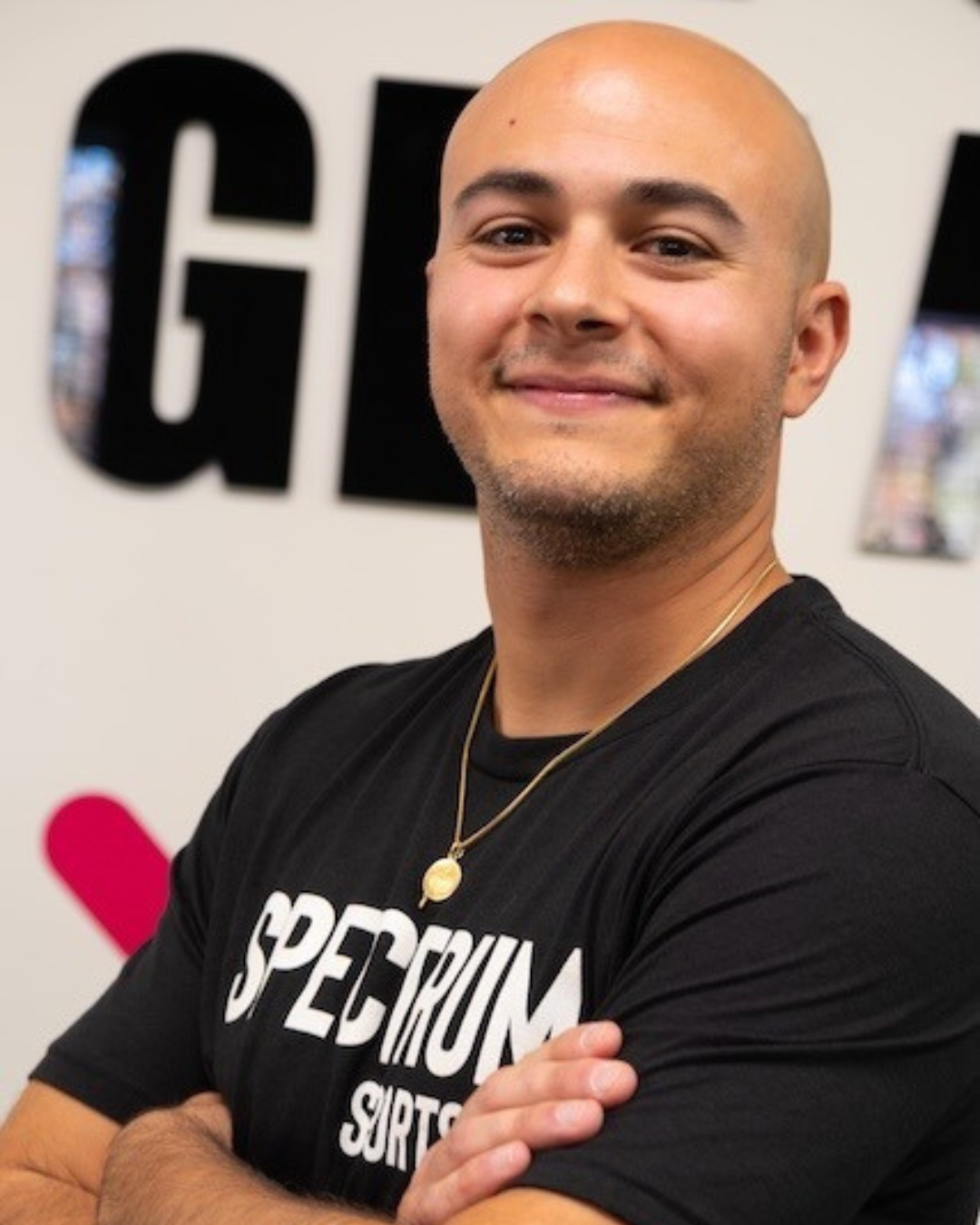
James grew up in Washington Township, NJ and went to Rutgers Camden where he studied History and attained his Teaching Certificate as well as his Special Education certificate. He taught at Williamstown High School in a self contained Autism classroom for 9 years and during that time started Spectrum Sports. An inclusive sports and fitness program for the neurodiverse population. He lives with his wife Amanda and their 3 boys whose oldest son Leo is on the Autism Spectrum.